
It is only gradually dawning on us that some of the information we have trustingly shared with commercial service providers can be used against us when we apply for a job or when we apply to admission to a college, says Ajit Balakrishnan.

We suffered worse political degradation during the Emergency. But we emerged resurgent and vigorous because the spirit was not broken. This time around, we face an imminent threat to it, says Shreekant Sambrani

How do you stand out in a crowd? Read this!
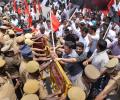
Protester Sasi Perumal's death has given a new fillip to the pro-prohibition movement, which was beginning to draw attention across Tamil Nadu after different political parties began to make it a part of their poll manifesto for next year, says N Sathiya Moorthy.

'Rahul Gandhi accuses the Modi government of being in thrall to corporate fat cats at the expense of farmers and other common folk. But the facts do not bear out this argument, as Indian farmers are relatively better off compared to the really wretched of the earth, the unfortunate landless, often itinerant, labourer. And since Rahul's ancestors are the ones who failed them, it is a little disingenuous of him to ignore them in his rhetorical flourishes,' says Rajeev Srinivasan.

Raja Chari is in training to go to space in 2019. Vaihayasi Pande Daniel presents the story of his journey from Cedar Falls, Iowa, to NASA. A Rediff.com Exclusive!

'Power sits lightly on Arun Jaitley's shoulders. Just because earth-shaking election results have brought his party in power, he has not gone recklessly ambitious. "Too soon, too fast" is not what he likes,' says Sheela Bhatt/Rediff.com about Budget 2014.

Throughout, Mekhail spoke calmly, with hardly an inflection making even the barest attempt to hijack his tone. His tone was so empty it made his narrative all the more touching. And ugly and grey, as the monsoon sky beyond the window.

At Sabarmati Ashram that very hot summer evening, some had come to see and feel the place where Bapu lived. Some had come to be alone on the lawns after a disappointing Class 12 result...
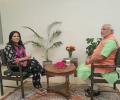
Smita Prakash, Editor, News, Asian News International, recalls the behind the scenes action during her recent television interview with Narendra Modi in Gandhinagar.


The controversy over Sant Rampal and his army of followers taking the law into their hands has once again thrown the spotlight on the clout that India's godmen possess.

Deepta Roy Chakraverti talks to Chandrima Pal about her book that chronicles her psychic investigations into what she says are unnatural occurrences in familiar places.

As India gears up to honour its pravasis on January 9 to mark their contribution in the nation's development, rediff.com presents perspectives from eminent writers on the Diaspora. Kicking off the series is Ambassador T P Sreenivasan, who points out that the change of the Diaspora policy put in place by Rajiv Gandhi following the military coup in Fiji and his decision to stand by them, was the one defining moment in India's dealings with its overseas family.

'Manto is the only writer to grasp what the project of Pakistan would eventually mean,' says Aakar Patel, who has translated a collection of Saadat Hasan Manto's essays in a just-released book Why I Write.
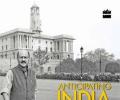
Shekhar Gupta's anthology is a valuable addition to our understanding of the seeming muddle that is India... The experience of reading his columns is more like a chat with a friend in the afterglow of an enjoyable drink, but never frivolous, says Shreekant Sambrani.
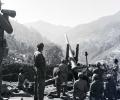
Fifty years ago, India and Pakistan fought a short but bloody war. The author finds out how Sainik Samachar, the defence ministry's journal, reported it.
